How much does SEO cost for a small business? It depends on which pricing model you buy, and each model buys something different. Here are my own published numbers so you have something real to hold: $150 per link, $200 an hour for consulting, $700 per podcast episode package, $5,000 a month for the full-service program, and a free 30-minute diagnostic call before any of it. Those numbers only help if you know what each one actually gets you, and which one to pay for first. That order is the part most owners get wrong, and it is the part of small business SEO nobody puts on a pricing page.
Five pricing models, and what each one actually buys
Most SEO is sold in one of five shapes. The price tag matters less than what you hold at the end of it, so here’s each model next to the thing you should be able to point at when the invoice is paid.
| Model | You’re paying for | What you should hold afterward | My published price |
|---|---|---|---|
| Hourly consulting | Time with someone who knows the answer | A decision, a diagnosis, or a second opinion | $200/hour |
| Per-project audit | A one-time look at what’s broken | A prioritized list of fixes you or a developer can work through | Billed as consulting hours |
| Per link | One editorially placed link from a real site | A live URL you can click, on a site with a real audience | $150 per link |
| Content package | Pages and posts built around a topic or a conversation | Published articles, clips and email content with your name on them | $700 per podcast episode |
| Monthly retainer | Ongoing work across technical, content and authority | An itemized list every month of what shipped | $5,000/month full-service |
The podcast package is the one people ask about. On my prices page it covers a recorded and edited interview, three content articles, a guest recap post the guest has a reason to share and link back to, distribution across LinkedIn Pulse, Substack, Reddit and Medium, social clips, and email content. It’s the same model I run on Unscripted SEO, Unscripted Small Business and Unscripted Home Improvement. The full monthly program adds community involvement campaigns (the cleanup events that earn City Hall and local news links), reporter outreach, and ongoing technical work on your site. Before you sign with anyone, run through how to choose a small business SEO, and the red flags.
A quick test you can run on any quote you get, mine included:
- Can you tell what one unit costs before a sales call?
- Can you name the thing you’ll hold when the work is done?
- Can you check it yourself, without asking the person who sold it?
Retainer theater is a monthly invoice you can’t itemize
The headline on my prices page promises “No Retainer Theater,” and the line under it says what that means: no vague “custom pricing” that takes three discovery calls before you find out what anything costs. A retainer isn’t the problem. I sell one. Theater is when you pay every month and can’t itemize what you got.
Well, the truth is that a monthly fee with no deliverables attached is hard to fire, because there’s nothing specific to point at. You get a report full of rankings for terms nobody searches, a traffic line that went up a little, and a promise that next quarter is the one. If that sounds familiar, ask for the list: which pages changed, which links went live, which fixes shipped, with URLs.
Google has its own version of this warning. Its guide to hiring an SEO says “No one can guarantee a #1 ranking on Google,” tells you to beware of anyone claiming a “special relationship” with Google, and says that during an audit you should grant read access to Search Console, not write access. A guarantee is the most expensive line in any SEO proposal, because you pay for it whether it comes true or not.
Pay to fix what’s broken before you pay for authority
Spend in this order. My take: links and content poured onto a broken site leak out the bottom.
- Set up the free tools. Nothing to buy yet. More on that below.
- Find what’s broken. A few consulting hours or an audit tells you whether pages aren’t indexed, whether your titles are duplicated, or whether your contact page is quietly failing. If calls go unanswered, fix that before anything else – I wrote about it in answer the phone before you buy more traffic.
- Then buy authority. Links, content and real-world mentions are what move a working site up. They’re also where most of the money goes, so they should go last, onto a site that can hold them.
You can stop after step two and be in better shape than most of your competitors. That’s the point of starting small: an hour of diagnosis costs less than a month of the wrong work.
Search Console, GA4 and your Business Profile cost nothing
The three tools you need to judge any SEO spend are free. Google Search Console is, in Google’s words, “a free service offered by Google” that shows how your site appears in search. Google Analytics gives you its tools “free of charge,” which is how you see whether search visits turn into calls and forms. And Google’s answer to “Is a Business Profile on Google free?” on its Business Profile page is “Yes.”
Here’s the other half of that. Google’s help page on local ranking says “There’s no way to request or pay for a better local ranking on Google.” So if someone bills you for Maps placement itself, you’re paying for something Google says can’t be bought. You can pay for the work that earns it: reviews, links, a complete profile.
Set all three up before you sign anything. Then whoever you hire has to show their work in tools you own.
What you’re actually paying for is proof of real work
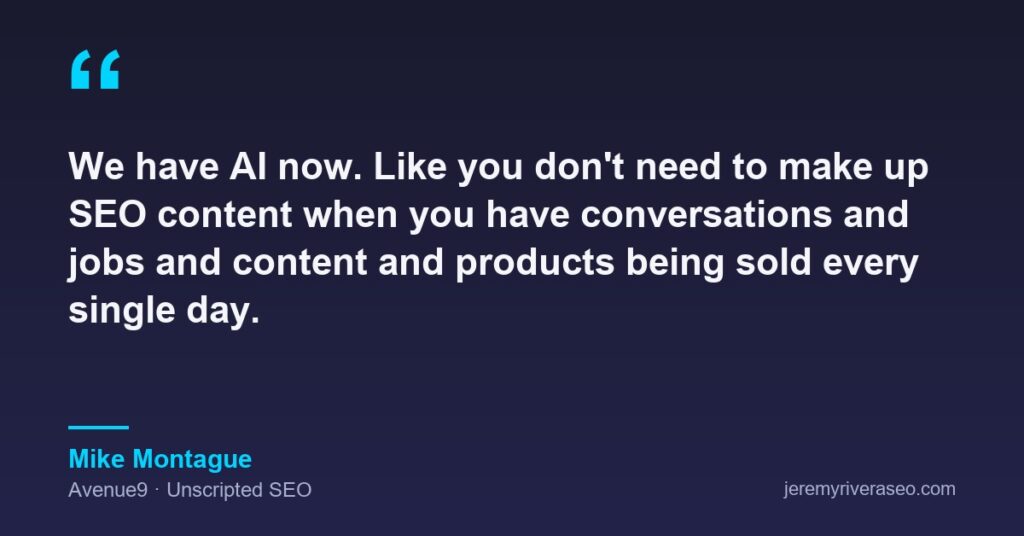
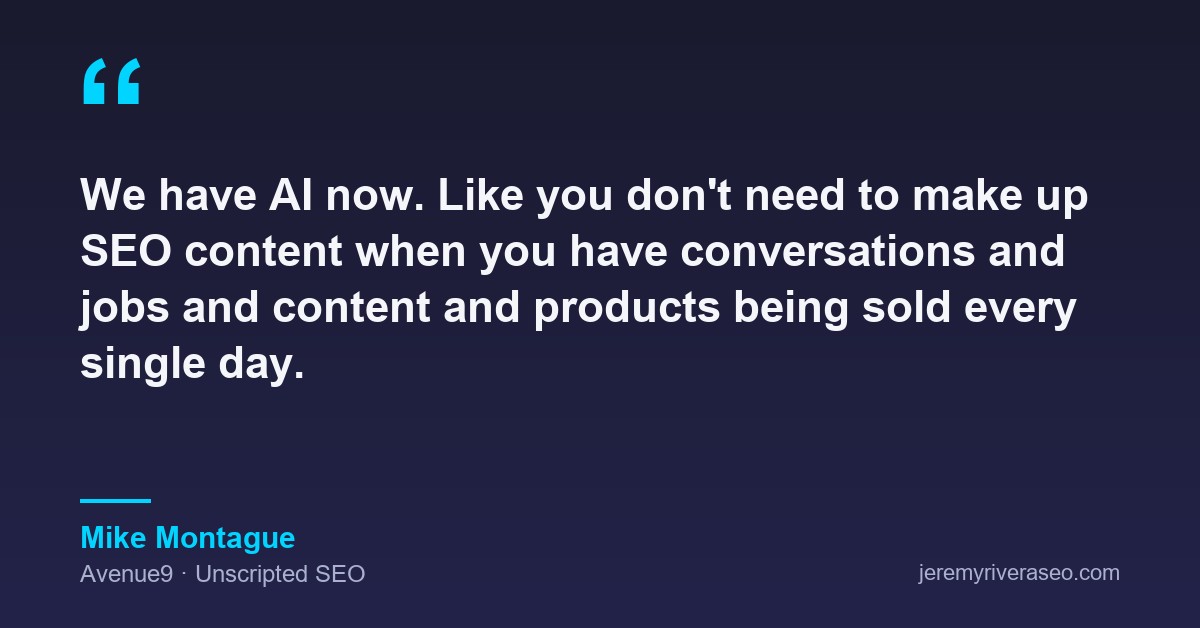
The cheapest SEO content you’ll ever get is the stuff you already have. Mike Montague put it plainly when he was on Unscripted SEO:
“We have AI now. Like you don’t need to make up SEO content when you have conversations and jobs and content and products being sold every single day.”
— Mike Montague, Avenue9, Unscripted SEO
That’s the line I’d use to judge any content package. What you’re paying for is someone who captures the jobs, questions and customer stories you produce every week and turn them into pages Google can find. If a vendor can’t tell you which of your real conversations a piece came from, it’s filler.
Then measure it by money. I made that case in traffic is a proxy: measure SEO by revenue, and it applies double when you’re the one paying. A traffic chart that climbs while the phone stays quiet is a cost.
If you want a second set of eyes on a quote you’ve already got, or on where your own spend should start, book a free 30-minute diagnostic call. I’ll tell you what I’d do, even if we don’t end up working together. If you already know you want help, the hire me page lays out how I work, and the broader guide to SEO for small businesses covers the basics you can do yourself this week.
So before you sign: what will you hold at the end of month one? Who owns the Search Console account? And if the work stopped tomorrow, what would still be live with your name on it?