I’ll admit something I told Laura Iancu on Unscripted SEO. When it comes to real optimization for LLMs, what our industry knows feels ankle deep. If you pitch yourself as an LLM optimization expert without four asterisks and a disclaimer page, I can’t trust you. And Laura, who runs Searchpedia and calls herself a search activist, had the best two-word reply I’ve heard to that pitch: “No, go home.”
So where does that leave you, when a client wants to know how their brand got into ChatGPT? Here’s what I took from the conversation.
Your clients will ask you about AI search first
Matt Brooks put it well: SEOs are in exactly the right seat to get asked what’s going on with AI search tools. That’s a blessing and a curse. If clients don’t ask you, they’ll ask somebody on LinkedIn who’s overselling it. If they do ask you, you have to answer honestly with very little solid ground under you.
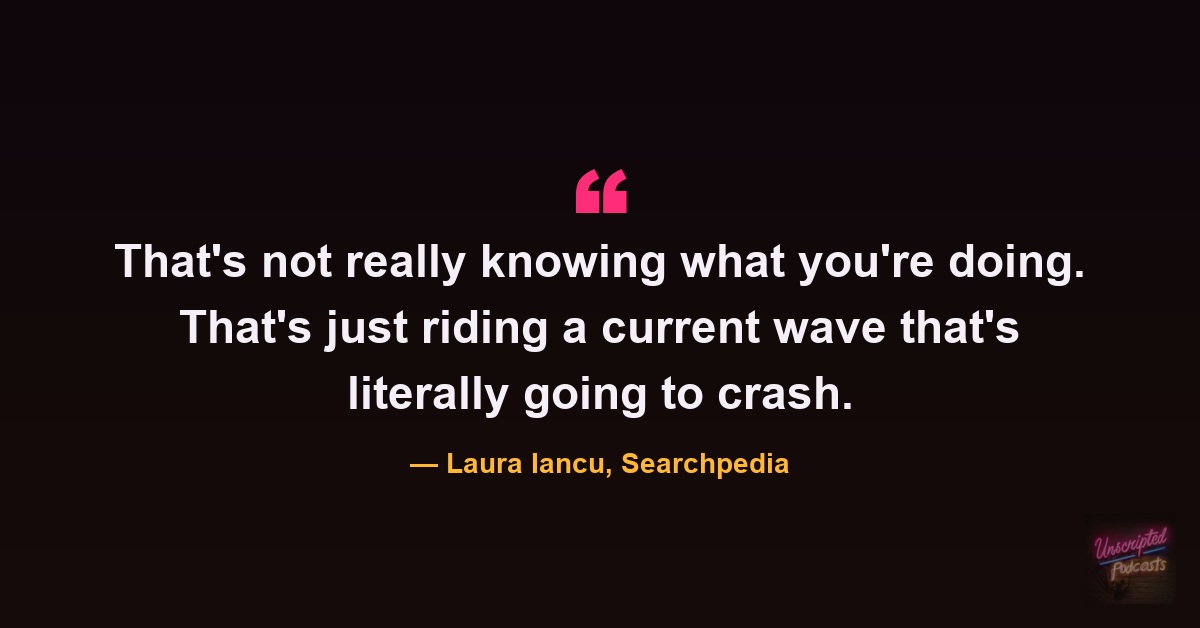
Laura noticed the same shift. With traditional SEO, she said, she was barely asked. Now it’s “my brand’s in ChatGPT, how did I get there?” Clients think AI answers are the gateway to leads. Sometimes they can be. But she’d feel like “a bit of a scammer” promising that a tactic will still be working months from now.
The ground moves every other month
Well, the truth is that it’s worse than Google for opacity, and that’s ironic, because you can see changes faster than ever. I’ve clarified pricing on a site, re-run the prompt within minutes and watched the answer change. Google never gave you that. It kept SEOs like mushrooms in the dark. But a new model ships every other month, the capability shifts inside models that already exist, and the list of variables behind how a brand gets valued keeps growing.
Laura’s version of the same point hit harder. She spent two weeks at an SEO conference in China without her laptop. In those two weeks Google shipped a core update and new multimodal reporting landed in Search Console. Someone as plugged in as she is came home feeling behind.
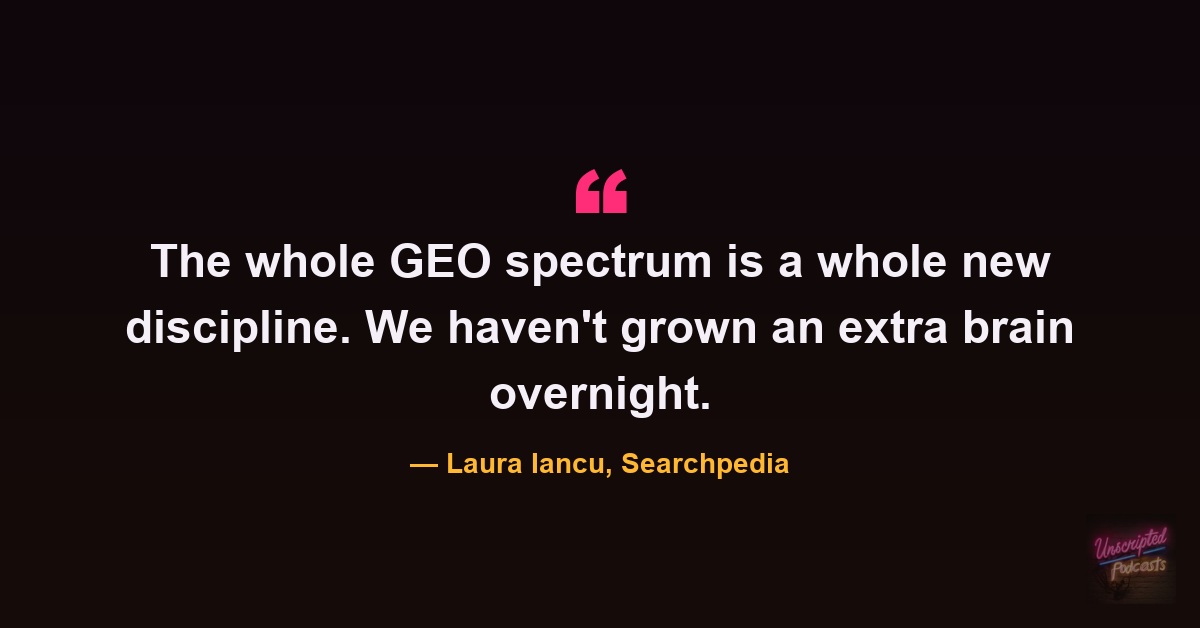
“But at the same time, we haven’t grown an extra brain overnight.”
What I actually do instead of claiming expertise
You don’t need to be an LLM expert to do useful work right now. You need to be the person who gets the client’s real knowledge onto the page. LLMs are just math. They can’t invent the detail a customer only tells a human.
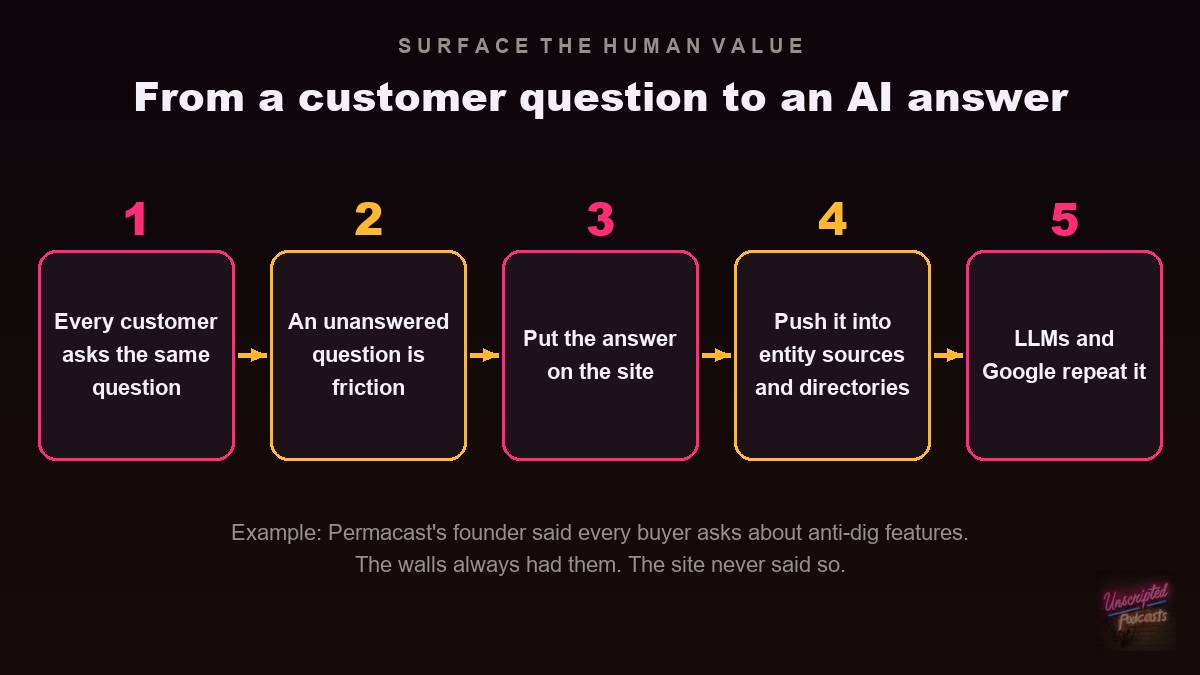
My favorite example is a precast concrete wall manufacturer I interviewed. Every customer asked whether someone could dig under the wall. The walls have anti-dig design built into the structure, so the company never thought to say it on the site. That question was friction on every sale, and the fix was a page, not a prompt hack. I made the same argument about trades in you cannot AI-zap a broken water heater.
Then measure with data you own. Laura compared synthetic AI visibility data from a paid tool against what Google and Microsoft report now, “and it’s very different.” Put Microsoft Clarity in your Google Tag Manager container and look at how much of your “direct” traffic is bots. Gert Mellak pushed me on the same thing when he challenged my SEO ROI on my own podcast.
Say “I don’t know yet” out loud
The move I’d steal from Laura is the plainest one. When she hasn’t tested something, she tells the client she needs a month to test it herself. She reads people she trusts, and she still checks it on her own clients, because something that worked for an expert “doesn’t mean it’s going to work for my clients.”
So what are you selling right now that you haven’t tested on a client of your own? Which of your AI search claims would survive the next model release? And when a client asks how they got into ChatGPT, are you going to guess, or tell them you’ll find out? Laura is on LinkedIn, and the full episode is on Unscripted SEO. Go find out.