I teach a homeschool class at a co-op, and while we were studying Germany I put on some music for the kids. They caught it. “All those people are AI. This is terrible. Turn it off.” They wanted a real oompah band. I work in digital marketing and I’ve grown acclimated to LLM output, but those kids reminded me that “that’s obviously AI” is now shorthand for junk. I told that story on Unscripted Small Business to Pamela Maria De La Luz, because her whole brand is built on the thing those kids were asking for.
Pamela is the founder of AgaveLuz Organic Tequila. She spent over twenty years selling tequila, got disappointed watching big brands cut corners, and took three years to build a certified organic one with two ingredients. She writes about the brand on the AgaveLuz blog. You can watch the full episode.
A founder with a conviction beats a content calendar
Here’s what I said on the show: pairing a product with a real mission is “a much better marketing approach” than opening a chatbot and putting up a hundred articles on how agave ferments. I think that reaction is pushing people back toward valuing human connection, empathy and good deeds.
Pamela’s version of that started years before the company. She volunteers with the Humane Society’s Pets for Life program and runs a trap-neuter-return effort for a feral cat colony in Los Angeles. When she built AgaveLuz, every bottle sold came with a donation to local rescues in California and Las Vegas. People told her that was a smart strategy. Her answer:
“It was never intended since the beginning of AgaveLuz as use it as a marketing or strategy, like a lot of people had told me, that was a smart strategy. I’m like, no.”
You can’t copy that. You can copy a donation page. You can’t copy over fifteen years of rescue work, or a feral cat colony that comes when she whistles.
Nonprofits have the mission, and you have the budget
On the show I cited a statistic from memory: nonprofits spend something like 19 percent on marketing, against 34 to 40 percent for companies. Treat those numbers as my recollection, not a sourced figure. The shape is what matters. Nonprofits have a mission they want to get out and not enough spend behind it. Companies want exposure and rarely think to partner with a nonprofit that can open doors for them.
That gap is why I offer clients a community cleanup service. We pick a park nearby, reach out to City Hall, message the local school and ask churches if they want to co-brand. It has netted my clients a lot of open doors, because they’re showing up to help instead of standing on a corner yelling “buy my stuff.” I wrote about why that kind of offline work matters more now in the digital shadow, and why local links are just relationships with URLs.
Pamela’s best example of that gap closing is Las Vegas. AgaveLuz partnered with the biggest rescue in the city.
“That has been our key to open so many big doors. We are in the menu of big places there.”
Visitors try it there and ask for it back home, and stores in other states call her because customers are asking. That’s the multiplier Andy Choi of Do Good Points talks about when he connects nonprofits with for-profit companies.
You can buy publicity, but you can’t keep it
Pamela’s cautionary tale was a brand that spent over fifty million dollars to be everywhere. The money’s gone. Here’s how I put it to her: you can buy publicity, but as soon as your money’s gone, so’s your publicity. If dollars for eyeballs is the only fuel, you have to keep throwing bills in the fire, and without anything deeper behind it, it can fail on its own.
Her answer is my favorite line from the episode:
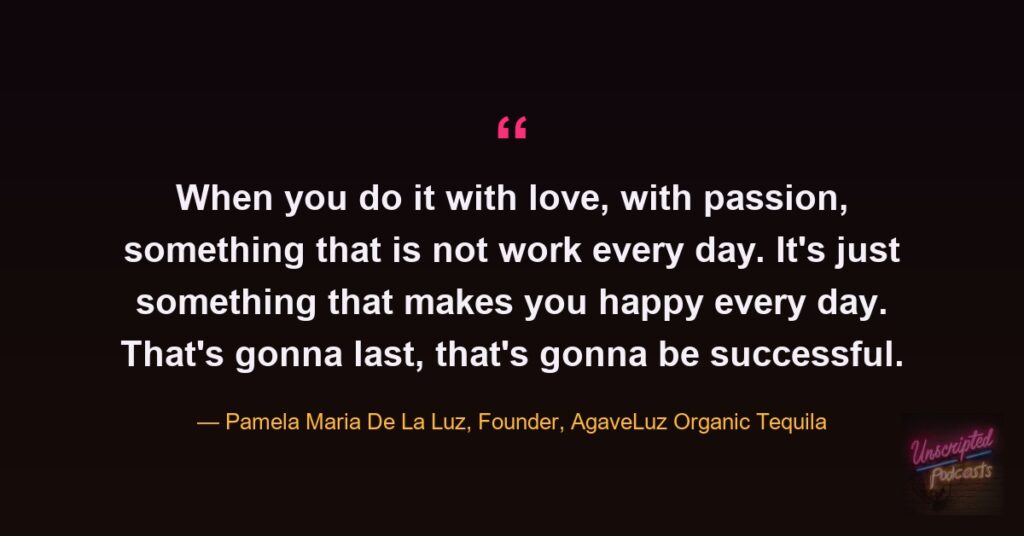
“Something that is meaningful, something that has roots. People don’t forget. People remember.”
The runway has never been shorter
I know a lot of people who put the bar for starting a business impossibly high. They think they need millions of dollars in capital. I once knew a guy with a 44-layer plan he had to get through before he could launch. My view is that the runway has never been shorter and more doors have never been open. So I asked Pamela what she’d tell someone with an idea.
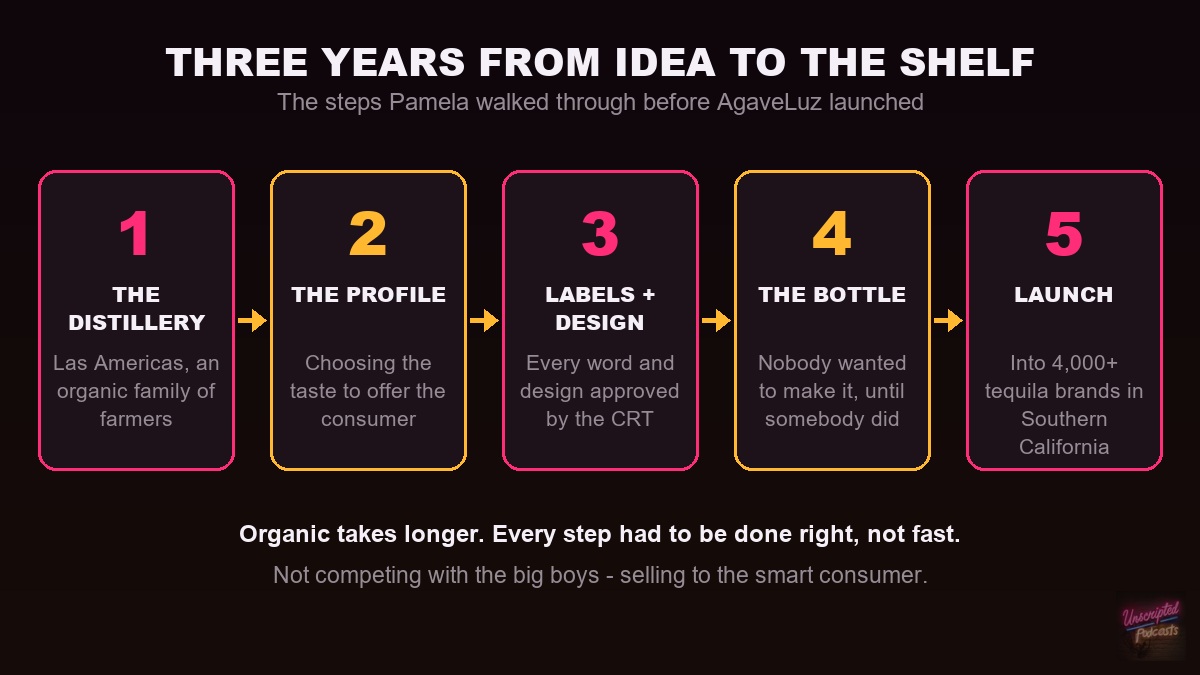
“We don’t wanna do things right now. We wanna do things right. So everything takes time.”
Those two views don’t conflict. You can start this week. What you can’t do is skip the years, and her three years of distillery visits, label approvals and a bottle nobody wanted to make are the proof.
What I’d take from this for your business
If you run a small business and you’re wondering what to do instead of publishing more content, here’s where I’d start:
- Write down the cause you already give time to. If you have to invent one, skip this play.
- Find the biggest organization for that cause in one city and ask what they need.
- Show up in person. Pamela still pours her own tastings in the stores that carry her.
- Let people who share the cause ask to help. Her pet-owner creators made videos for a bottle and a doggy toy.
For the full interview, read the Unscripted Small Business recap.
Pamela compared starting a business to get rich quick to “getting married, thinking about divorce if it doesn’t work.” Build the thing you’d do anyway, and the marketing has something real to point at.