I have spent twenty years watching businesses pour money into ad accounts and then wonder why nobody trusts them. Two recent guests on my Unscripted Small Business podcast made the same argument from two different angles: the most durable marketing channel is still a real conversation between two human beings.
The Channel That Doesn’t Show Up in Your Analytics
Kate Hendrickson spent over a decade inside a large Chicago consulting firm before she brought those leadership frameworks to plumbers, HVAC owners, and behavioral health clinics. Ask her about her marketing funnel and she will tell you she doesn’t really have one in the way most agencies mean it. She markets by getting in front of people: speaking at conferences, showing up on podcasts, and having lunch with people she might one day partner with.
AI can’t replace that people connection. I market through conversations. I would rather sit down and have lunch with you and talk about how we could partner than run a thousand ads.— Kate Hendrickson
That is not a soft, fuzzy preference. It is a strategic read on what she actually sells. Leadership consulting is a long-term partnership built on trust, and trust does not get manufactured by a retargeting pixel. For the kind of work she does, five meaningful conversations will out-earn a thousand impressions every time. I made the same case about why human judgment keeps its value when I wrote about what a twin-run digital agency taught me about the things AI can’t counterfeit.
First Impressions Are Visual, but Commitments Are Made in Conversation
Bruce Ashford works with nonprofit CEOs and small business owners who have a high-value mission but struggle to grow because their message is muddy. He frames the buying journey in a way that has stuck with me.
First impressions are visual. Commitments to buy are message based.— Bruce Ashford
Your logo and your homepage hero get you in the door. But the moment of commitment, the part where someone decides to hand you money or join your cause, happens through message and dialogue. That is why he builds everything around the StoryBrand idea that the customer is the hero and your business is the guide. Brief, credible, empathetic. You are not the star of the story. You are the person who helps the hero win, and you communicate that one conversation at a time.
Why the AI Flood Makes Conversation More Valuable, Not Less
Here is the part that should make every small business owner pay attention. Bruce has authored nine books and ghostwritten fifteen, so when he talks about machine-written content he is not guessing.
AI script is soulless. People can tell when something’s written by a machine. And now that everybody is doing their writing with machines, it just all blurs together.— Bruce Ashford
His verdict is that AI can lift D-minus copy up to a C, but it cannot get you to a B or an A. And because everyone is now using the same tools, the entire content landscape is converging on the same beige middle. That is exactly why a real human relationship has gotten more valuable, not less. When every inbox is full of generated pitches, the person who actually shows up and listens stands out. I dug into the local-trust version of this in my notes on how small local businesses earn visibility the hard, honest way.
None of this means you ignore the machines. Bruce is a strong advocate for Artificial Engine Optimization, making your site technically clean and authoritative enough that AI engines recommend you. I build and recommend tools for that kind of work over at SEO Arcade, and I talk through the technical side constantly on Unscripted SEO. The point is sequencing: the technology gets you found, but the conversation closes the deal.
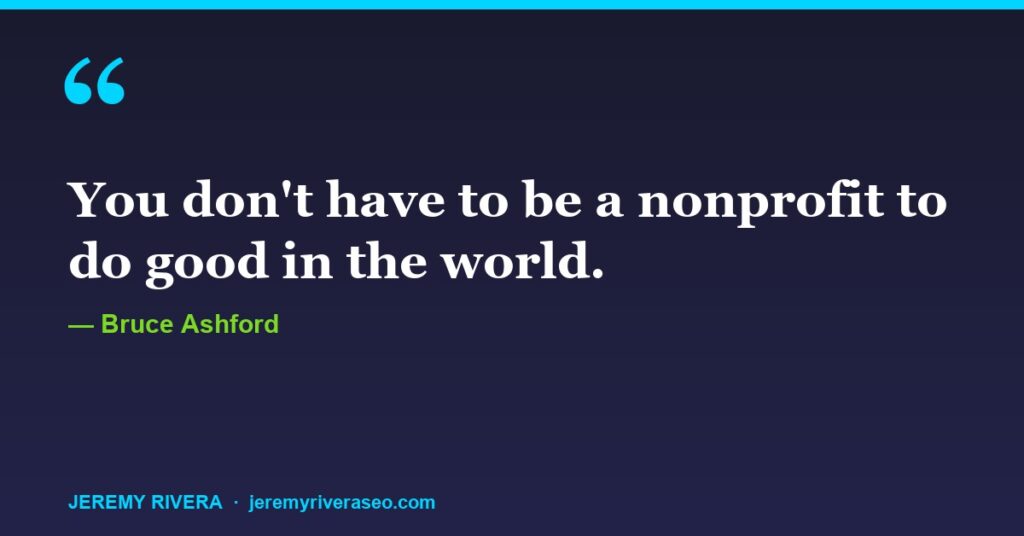
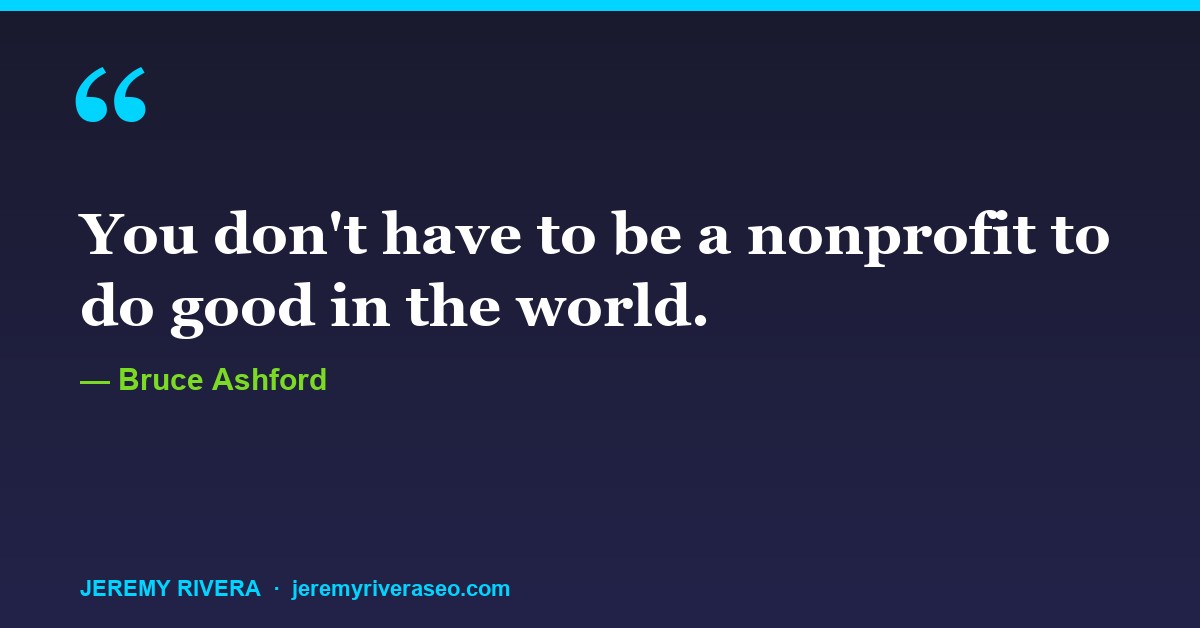
You Don’t Have to Be a Nonprofit to Do Good
One line of Bruce’s reframed how I think about mission-driven marketing entirely. When I asked him about the tipping point where a values-driven business should become a nonprofit, he pointed out that the real line is government regulation, not goodness. Plenty of for-profit businesses do genuine good in their communities without ever filing for 501(c)(3) status.
Kate’s version of this is finding the story in so-called boring industries. When she works with an irrigation company, she doesn’t try to make irrigation interesting. She makes the people interesting. They are not just selling sprinkler systems, they are selling who they are and what they believe in. That is doing good and marketing at the same time, and it only works through human contact.
This Is How Local Communities Actually Get Built
It is the same instinct behind the Digital Christian Collaborative, the Cookeville entrepreneur community I am part of. People helping people, showing up in the same room, referring real work to each other. No ad account on earth replicates a roomful of business owners who trust one another.
What I’d Tell You to Do This Quarter
Kate’s broader advice fits the same theme. Stop trying to do twenty things at once. Narrow to two or three priorities, then actually track whether you are moving toward them. Marketing through conversations is one of those priorities you can commit to without a big budget: book the lunch, accept the podcast invite, answer the email like a person instead of a template.
After twenty years in this business, I have watched flashy ad campaigns evaporate and watched relationships compound for a decade. Spend on the ads if the math works. But never let the dashboard convince you that the most reliable channel you own, your own willingness to sit down with another human and listen, is somehow obsolete. It is the one thing the machines cannot fake, and that makes it the best marketing investment you have.