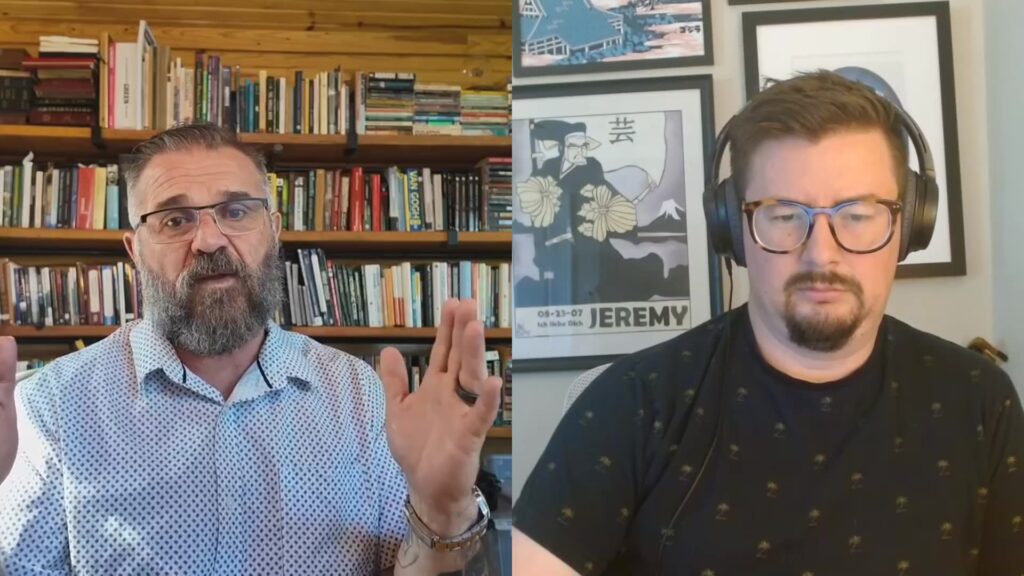
A few years ago I was robbed at gunpoint on a walk around my neighborhood in Mount Juliet, Tennessee. The robbery didn’t change me. The therapy afterward did, because it showed me something about how I work. I talked it through with Dr. John A. King on the Unscripted Small Business Podcast, and his answers are worth passing on to you, especially if you run a small business or freelance.
Fight, flight, freeze and appease
Everybody knows fight or flight. Those are the obvious ones, because you can see somebody run or get angry. In therapy after the robbery I learned there are two more: you can freeze, or you can appease, where you just say and do whatever keeps the peace. The combination of freeze and appease is the one that goes undetected, because from the outside it looks like you’re fine. You’re just quiet, or you’re just agreeable.
I recognized that same numb feeling in places that had nothing to do with a gun. Arguments at home. And work: I had taken on more of an audit for an SEO company than I could chew, and by week three or four I was late on an audit I could have done in an hour. I wasn’t lazy. I was frozen.
If you’ve ever watched a simple deliverable sit on your list for weeks while you did everything around it, that might be what’s going on. And if you’ve ever said yes to a client because no felt dangerous, that’s appease. Living as the yes man out of fear will quietly wreck a career, a path and a relationship.
You don’t need a gun to the chest for this to apply
John made a point I want every business owner to hear. People hear stories like mine or his and decide it doesn’t apply to them. It does.
“I haven’t experienced that, but divorce is traumatic. The death of a loved one’s traumatic. The loss of a business.”
He’s describing losing something you poured 10 years and hundreds of thousands of dollars into, and being unemployed the next morning. Then he connected it to performance: when high performers need to excel and instead freeze, it’s often because they’re tracking back to an event like that. You can’t control what triggers somebody else, he said. “You have to be responsible for what triggers you.”
Sit with it instead of running from it
I asked John how you take inventory of your failures without living in them. Why didn’t I save when I said I would? Why did that launch flop? His answer came from his culture as an Indigenous Australian. You sit on the ground with a situation and you don’t race away from it.
Then he gave me something concrete. Take the memory, give yourself half an hour and a cup of coffee, drag it out and look at it. Ask what was going on in the other person’s life. When he did that with his own past, the fear turned into something closer to empathy, and he says that’s what puts you back in control:
“I’m actually in control of my emotional response when I live from the inside out.”
For a business owner, that’s a practical skill. The client who screamed at you, the partner who walked, the year you almost lost the business. If you never sit with those, they show up as hesitation every time something similar comes along.
Say stop, then make a plan
John’s tool for when the fear comes back is simple: a mental stop sign. Notice it, say stop, and you’re already starting to change your response. He listed the fears every entrepreneur knows, failure, the bankroll, “they spend all the money on a holiday with the kids and it’s tax season.” Then you stop and “come up with a plan going forward that’s going to make our tomorrow different than our today.”
That’s the part I needed. Freeze isn’t fixed by trying harder. It’s fixed by noticing, stopping and writing down the next step, the one you can actually take today.
Three things, five minutes each
If you take one thing from this, take John’s three-by-five rule: three things a day, five minutes each, “because anybody can do that.” It’s not about which three. It’s about committing to them, because the small wins retrain you to move instead of freeze.
So what’s the deliverable that’s been sitting on your list for three weeks? Who did you say yes to this month because no felt dangerous? And what three things, five minutes each, would get you moving again tomorrow?
Hear the full conversation, including how John rebuilt after losing his marriage, his church and his consulting business at 45, in the Unscripted Small Business recap.
This is my experience and a conversation about running a business. It is not medical or mental health advice.