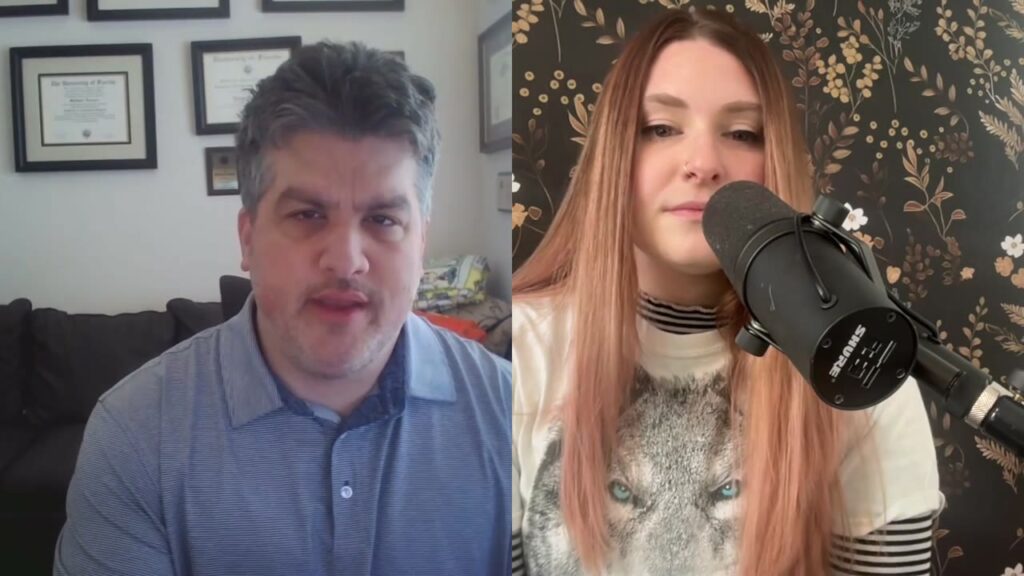
Can a small professional firm actually replace staff with AI without cutting corners? Matthew Fornaro, a Florida business law attorney who has run his own firm for almost 10 years, says he already has. He told host Abbey Crane on the Unscripted Small Business Podcast that he used to work with a virtual associate and assistant. Now:
“Through the use of AI, I’ve scaled that back where I only have an assistant now and I’ve gotten rid of some of my overhead because it’s been replaced by the AI.”
What makes his take worth your time is the second half. He’s just as clear about where AI stops.
You don’t have to be on the cutting edge to cut overhead
Matthew doesn’t claim to be an early adopter. “I’m not on the cutting edge, but I’m pretty proficient in it and I know how to use it,” he said. That’s the realistic bar for most small business owners. You don’t need to be first. You need to be competent enough to hand off the repetitive work and keep the judgment calls.
His summary of how the firm runs today was blunt: “I’m using a lot of technology to take the place of people.” If you’re a solo or a two-person shop, that’s the opportunity. The admin and first-draft work that used to justify a hire can now be done in-house, by you, faster.
The work product is still yours
Here’s where Matthew draws the line, and it’s the part most AI enthusiasm skips. He’s watched attorneys paste AI output straight into filings and end up citing cases that don’t exist. The tool didn’t fail them. They did, because “they don’t do the due diligence and the follow-up and they don’t take responsibility for the work product that’s put out there.”
“The AI is good as an enhancement, it’s not as good as a replacement, it’s a great tool to supplement what you’re doing but it’s not a replacement for you taking responsibility for everything, your own due diligence, and your own work.”
Swap “court filing” for “client proposal,” “blog post” or “invoice terms” and the warning still holds. If your name is on it, you read it.
Where AI drafts go wrong: the parts it skips
Abbey asked what holes he sees in contracts people create with AI. His answer wasn’t that the language is wrong. It’s that AI optimizes for getting to the end. A contract drafted by an attorney is meant to account for everything, while AI “kind of wants to, you know, just get from point A to Z as quickly as possible,” so the provisions that protect you are missing or understated.
That’s a useful test for any AI-assisted work you do:
- Ask what a careful professional would have added that the draft left out, not just whether what’s there is correct.
- Check every citation, number and name against a source you trust.
- Keep the decisions with the person who’s accountable for the outcome.
What this means if you’re running a small business
Matthew’s own setup is a decent template. One person, one assistant, a lot of software, and no illusions about who signs off. He also made the case, later in the episode, for budgeting for the professionals you still need, your accountant and your attorney, from the start rather than after something goes wrong. AI can shrink the team around you. It doesn’t shrink your responsibility.
Hear the whole conversation, including his walkthrough of LLCs, S corporations and the contracts every business needs, in the full Unscripted Small Business recap. For more on drawing your own lines, see more small business articles here.
Matthew Fornaro’s comments in this article are general information and are not legal advice.