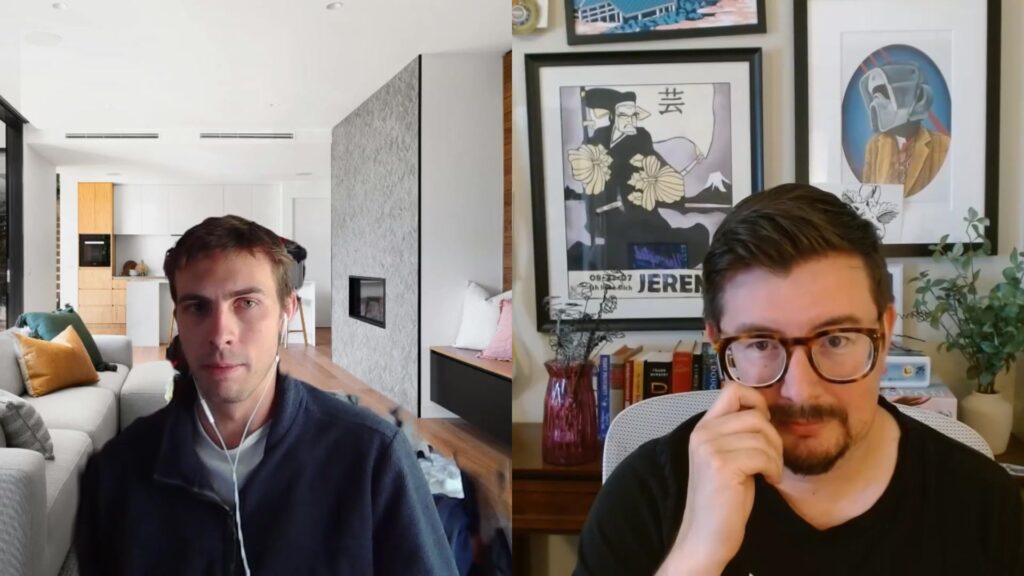
Where does everything you’ve done in ChatGPT or Claude actually live? That’s the question Tom Girgash opens with when he explains Taproot, the memory layer he quit his job to build. Most people answer “in past chats.” Then he asks the follow-up:
“And the way I’m like, do you know how to find that information? Do you know what they’re bringing up is real and true?”
Tom Girgash, Taproot (12:57)
Most people can’t answer that one. I couldn’t either, and I use Claude all day. Tom came on the Unscripted SaaS Podcast to talk about his product, but the conversation kept circling back to something every business publishing online should understand about how these tools work.
🎧 Listen to this episode
📺 Watch the interview
An LLM makes the answer up every single time
Here’s the part people miss. A language model isn’t looking anything up when it answers you. It’s generating a fresh response from its training data, every time. When it doesn’t have what it needs, it can run a retrieval step, pull pages from search, parse them and answer from those. As I put it to Tom: “But that’s not memory. The training database is not memory for your particular instance.”
Tom built Taproot around that gap. His 30-second pitch:
“Taproot gives the ability for people to connect their knowledge with AI. Everyone has different contexts, but if you’re a heavy AI user, sometimes the reasoning you get back from AI is not actually rooted in your work.”
Tom Girgash, Taproot (3:35)
His fix is to keep your notes as files on your own machine and let any tool that speaks MCP (Claude, ChatGPT, Codex, Claude Code) pull from them. The payoff, in his words, is accuracy: “having the application bring up the correct information would actually make it useful. If it’s just hallucinating on information, it’s not going to be helpful to users.”
Your brand has the same problem, in public
Now flip it around. When someone asks ChatGPT about your business, the model is doing exactly what Tom described. It’s generating an answer, and it’s only grounded in your work if your work is somewhere it can find. If you haven’t published the facts about what you do, who you serve and what it costs, the model fills the gap with whatever it has. That’s how you end up with confident, wrong answers about your own company.
That’s why I keep telling clients that AI visibility starts with being the source. A few things that follow from it:
- Publish the facts you want repeated. Pricing, service area, who it’s for. Taproot’s own site does this well, with a plain pricing page that a model can quote without guessing.
- Answer the comparison question yourself. Tom has a page on how Taproot differs from built-in AI memory. If you don’t explain how you’re different, a model will do it for you.
- Feed it real material. Zeke Camusio’s advice to record every meeting is the same idea applied inside a business: the training data you already have is worth more than the prompt you write.
- Check what comes back. Dr. Christiane Schroeter’s warning that your AI is a yes man applies here too. Ask the tools about yourself and read the answers critically.
Own the place your knowledge lives
The detail I liked most about Tom’s design is where the data sits. Everything lives on your computer, in files you control:
“So having a place that’s actually yours has been super useful.”
Tom Girgash, Taproot (13:55)
That’s the same reason I tell businesses not to build their whole presence on rented land. Your website is the file system for your brand. Social platforms, AI chat histories and directory listings are all somebody else’s database. When the context matters, keep the original where you control it, then let the tools pull from it.
Grounding beats volume
Tom also said something about audiences that lines up with all of this. People are tired of AI slop, and he thinks the advantage swings back toward being recognizably a person. That’s the case I made in distribution is the last moat: when anyone can generate content, the thing that’s hard to copy is your actual experience, published where people and machines can find it.
So go ask ChatGPT what your business does. Is the answer rooted in your work, or is it making it up?
Listen to the full conversation on Unscripted SaaS, or read the show recap: Tom Girgash on building Taproot, the memory layer for solo AI operators.