You want the money, but not just any money. Money that leaves the product alone. That’s the line Mark Burnett keeps coming back to, and after watching a funded competitor up close, I think he’s right.
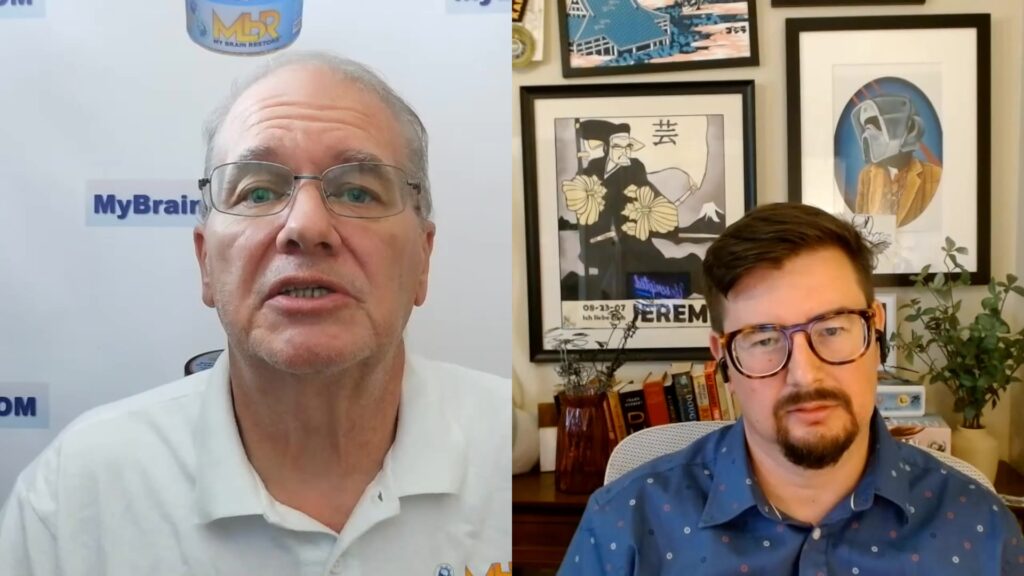
Mark is the founder of MyBrainRestore, a single-ingredient supplement company he started at 67 after a career as a database programmer. When I talked with him on the Unscripted Small Business Podcast, the part I keep thinking about wasn’t the product. It was how carefully he guards control of it.
He who has the gold makes the rules
Mark has raised money before. His database company was offered $34 million right before the dot-com bubble burst, and he watched that money just go “poof.” So he doesn’t romanticize investors.
“You have to be very careful with who you get in bed with. you know, in the sense of they might give you money, but sometimes he who has the gold makes the rules.”
The rule they want to make, in his experience, is usually about cost. “Why don’t we put the filler in?” His answer: “And I just won’t have any of that.”
The red flags show up early
His favorite cautionary tale is short. A backer was ready to put money in, on one condition: hire his brother as the company accountant, because the brother couldn’t get a job anywhere else. Mark said no and walked away from the deal.
You can learn a lot from that one. Watch for these before you sign anything:
- Hiring requests that serve the investor, not the business
- Pressure to cut the cost of the product before you’ve proven demand
- Decision rights handed to someone outside the business (Mark watched one investor group hand the decision to a doctor, the “worst person in the planet to make a decision in an investment”)
- Any term sheet where you lose the majority
I’ve seen the other side
I worked for a company that was one hundred percent bootstrapped, and we watched our direct competitor take a first round and then a second. Two years later the investors were at the door demanding more revenue. The product suffered, they had fewer developers, and we hired their talent as it got squeezed out. Funding isn’t evil. But you need to know what the people funding you will want in year two, because it won’t be what they said in the pitch meeting.
Keep 51%, and write your standards down
I asked Mark whether he’d written his standards into the company documents, the way Brandon Moon recommends for owners planning an exit. His answer was control. Every investor, he said, would be glad to take 51% of his Delaware corporation. He isn’t selling it, because “it’s hard to carve that in stone if they get 51%.”
He’s also set up his supply chain so the standard is hard to quietly lower. He has his wholesalers, he’s tested others that “sell bad goods,” and he turned them down.
“I would call that a wrong direction to go in. Okay. I I wanted to stay a Ferrari.”
So before you take the meeting, decide what isn’t for sale. The supplier? The people who answer your phone? The 51%? If you can’t name it, the person with the gold will name it for you. For more on building something that doesn’t depend on you, read my notes from my conversation with Brad Poulos, and the full episode recap on Unscripted Small Business.
This post is about running a business. It is not medical, health or investment advice, and it makes no claims about any product.